Ronald
Nyanzi
Advancing Human-AI collaboration in education through research and innovation
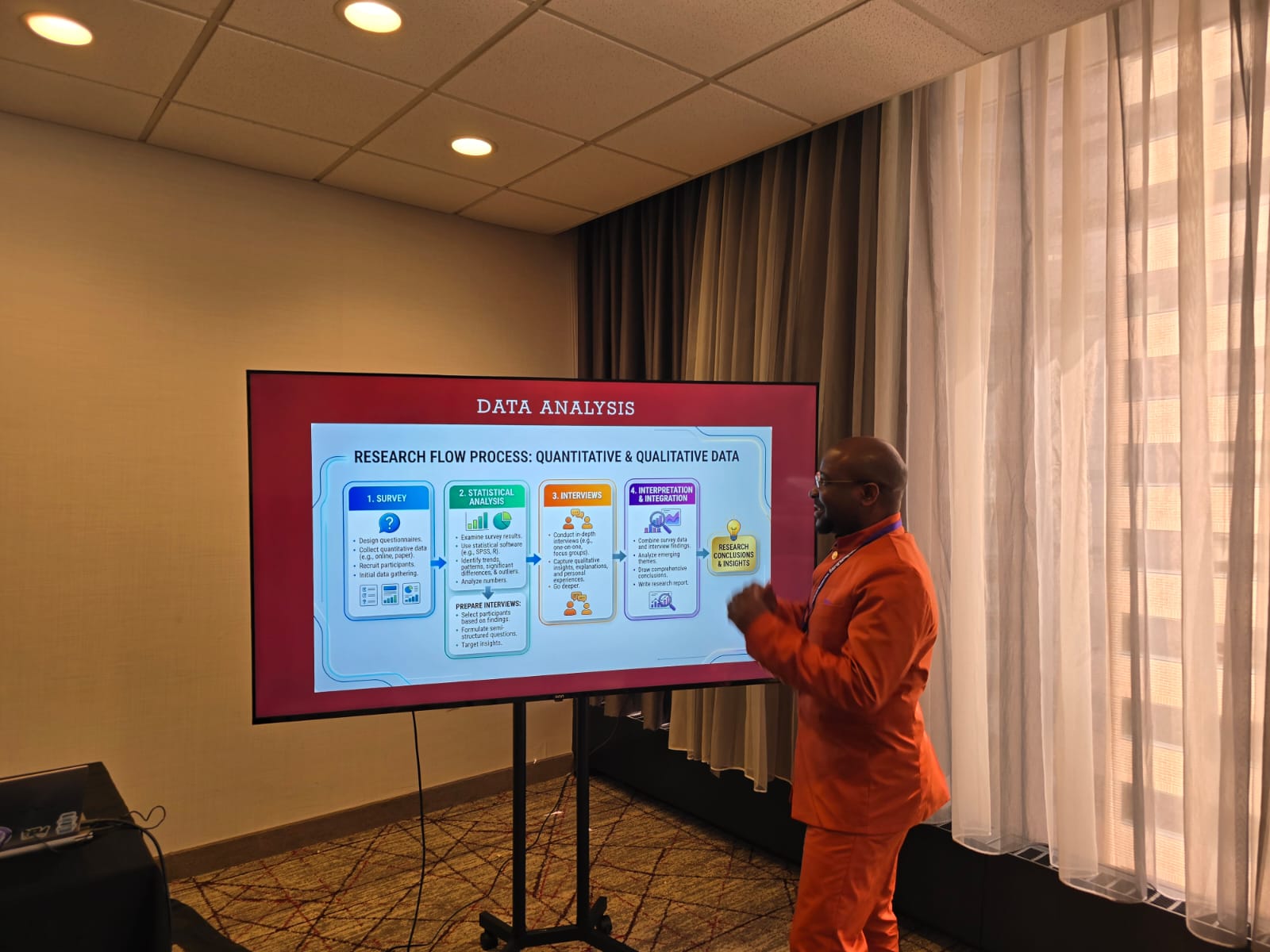
About Me
AI & Education Researcher | Instructional Designer | Fulbright Alumnus

Ronald Nyanzi is a doctoral researcher in Curriculum and Instruction at Indiana University of Pennsylvania, specializing in integrating artificial intelligence into education, with a focus on responsible, ethical, and contextually grounded adoption in resource-constrained settings.
His research examines how generative AI is shaping teaching, learning, and instructional design, drawing on technology acceptance and socio-technical perspectives, including work informed by the UTAUT framework in higher education contexts in sub-Saharan Africa.
With a strong background in instructional design and educational technology, he develops evidence-based learning models and frameworks that support meaningful AI integration while strengthening, not replacing, human cognition and pedagogical judgment.
He works across the United States and East Africa, contributing to faculty development, digital learning innovation, and scholarship that bridges theory and practice in emerging educational technologies.
Recognition
Awards &
Fellowships
Fulbright International Leaders In Education Program
Prestigious U.S. government international exchange award recognizing academic excellence and the national importance of research in AI and education across international contexts.
Graduate Travel Funding Award
Indiana University of Pennsylvania Graduate Student Travel Funding ($500) is a competitive institutional award supporting scholarly conference participation, research dissemination, and professional academic engagement.
Graduate Travel Funding Award
Indiana University of Pennsylvania Graduate Student Travel Funding ($500) is a competitive institutional award supporting scholarly conference participation, research dissemination, and professional academic engagement.
Department of Professional Studies in Education Scholarship
Department of Professional Studies in Education Scholarship (IUP) supports outstanding graduate students with competitive funding to advance academic excellence, research engagement, and professional development initiatives.
Dean's Merit Scholarship
Awarded by the College of Education for outstanding academic performance and exemplary contributions to the field of curriculum and instructional technology.
Graduate Scholarship Award (SGSR)
Graduate Scholarship Award (SGSR), Indiana University of Pennsylvania, is a highly competitive merit-based award recognizing academic excellence and supporting advanced graduate research and scholarly achievement.
Microsoft Live @Edu Deployment and Integration
Microsoft Live @Edu Deployment and Integration (Uganda, 2010) was a capacity-building initiative supporting institutional adoption of Microsoft education tools to enhance digital learning and academic collaboration.
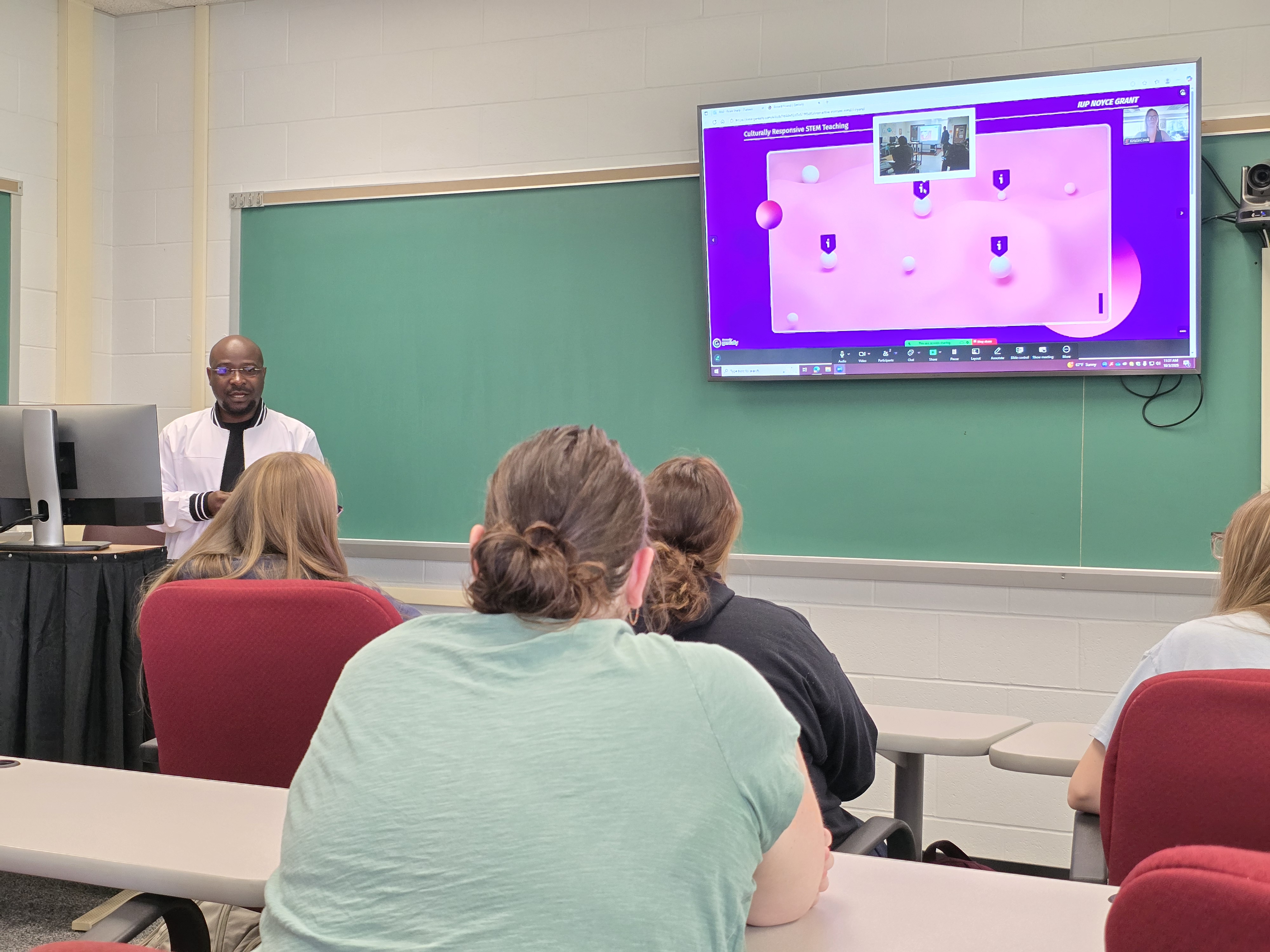
Research Focus
Areas of Expertise
Interdisciplinary research at the intersection of AI, learning science, and educational technology.
AI in Education
Investigating how AI transforms learning environments, student outcomes, and educator roles across diverse educational contexts.
Cross-Cultural and International Education Research (U.S. and Sub-Saharan Africa)
Conducting cross-cultural and international education research across the U.S. and Sub-Saharan Africa, focusing on comparative perspectives in teaching, learning, and educational technology integration.
AI Governance and Policy
Focus on AI governance and policy in education, examining ethical frameworks, responsible AI adoption, and institutional guidelines for equitable and transparent use of artificial intelligence.
Curriculum and Instruction
Specializing in curriculum and instruction within higher education, focusing on the design, implementation, and evaluation of effective learning experiences in diverse academic settings.
Instructional & Learning Experience Design
Designing evidence-based learning experiences that integrate technology while prioritizing learner agency and deep understanding.
Faculty Development & Professional Learning Design
Empowering educators with frameworks and skills to adopt AI tools responsibly, building institutional capacity for technology-enhanced teaching.
Generative AI Adoption
Studying patterns, barriers, and facilitators of generative AI adoption among faculty and students in higher education.
Learning Sciences and Cognitive-Oriented Technology Use in Education
Developing theoretical models defining how humans and AI systems can collaborate optimally to enhance cognitive performance and learning outcomes.
EdTech in Developing Countries
Advancing digital learning access and equity in resource-constrained environments across sub-Saharan Africa and other developing regions.
Original Scholarship
Research Contributions
Pioneering theoretical frameworks advancing the science of human–AI interaction in education.
The SPACE Framework
The SPACE Framework was developed as a practitioner-informed instructional design model integrating principles from learning sciences, cognitive psychology, and educational technology to support effective learning in resource-constrained environments. https://nyanzir.github.io/space-framework/
Strengthens instructional design by promoting spaced practice, cognitive engagement, and sustainable learning in resource-constrained contexts.
Adaptive Cognitive Delegation Theory (ACDT)
ACDT extends cognitive offloading into dynamic, context-sensitive task allocation between human learners and AI systems. The theory accounts for task complexity, learner expertise, trust calibration, and situational demands, proposing that optimal human-AI teaming requires fluid real-time negotiation of cognitive responsibility.
Provides a dynamic model for designing adaptive AI-powered learning environments that respond to individual learner needs, expertise levels, and contextual conditions in real time.
AI Adoption in Higher Education using UTAUT
Through a quantitative investigation at universities in Uganda and the U.S., this research examines how faculty conceptualize, adopt, and integrate generative AI into teaching practice. Findings reveal complex relationships between institutional culture, technological readiness, pedagogical beliefs, and AI adoption behavior.
Provides actionable evidence for higher education institutions navigating AI policy, professional development, and equitable technology access in diverse global contexts.
Research Impact
By the Numbers
Measurable contributions across scholarship, practice, and international collaboration.
Research Theme Distribution
- AI in Education30%
- Instructional Design25%
- Faculty Development15%
- Generative AI15%
- EdTech Global15%
Scholarship
Publications
Peer-reviewed articles, book chapters, conference papers, and original conceptual frameworks.
AI in Instructional Design: A Critical Content Analysis of Outputs for Planning, Assessment, and Personalization
Ronald Nyanzi · Journal of Educational Technology Research · 2024
This study employs critical content analysis to evaluate AI-generated outputs across instructional planning, assessment design, and personalized learning pathways. Findings reveal both significant potential and notable limitations in current AI capabilities for instructional design practice.
Theory into Practice
Applied Projects
A selection of initiatives where theoretical insights meet real-world educational challenges.
Generative AI in Instructional Design
ActiveThe Challenge
Instructional designers lack frameworks for critically evaluating AI-generated content.
The Solution
Developed an AI-assisted workflow with critical evaluation checkpoints grounded in GCOT principles.
Impact: Adopted by faculty at 3 institutions; informing AI policy at the university level.
Faculty AI Adoption Research (Uganda)
OngoingThe Challenge
Limited empirical data on how faculty in East African universities perceive and adopt generative AI.
The Solution
Mixed-methods study across four Ugandan universities examining adoption patterns and enabling conditions.
Impact: Informs national higher education AI policy; presented at two international conferences.
Digital Literacy Training Programs
CompletedThe Challenge
Educators in sub-Saharan Africa lacked foundational digital skills for modern online instruction.
The Solution
Designed modular digital literacy workshops adapted for low-bandwidth, mobile-first contexts.
Impact: Over 200 educators trained; measurable improvements in digital confidence and classroom technology use.
Online Learning Design Initiatives
OngoingThe Challenge
Online course design often lacks engagement, accessibility, and instructional coherence.
The Solution
Collaborative course redesign applying UDL principles, backward design, and AI-enhanced personalization.
Impact: Improved student satisfaction and completion rates across redesigned courses.
Featured Resources
Digital Store
Discover our most popular eBooks and guides on educational technology and AI.
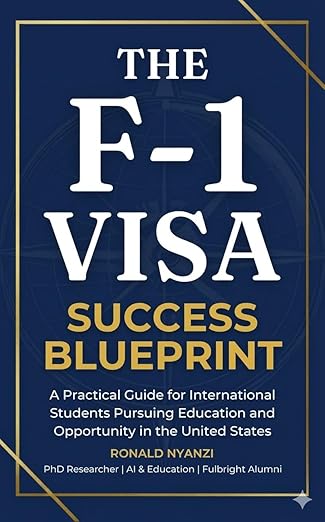 eBook
eBookThe F-1 Visa Success Blueprint: A Practical Guide for International Students Pursuing Education and Opportunity in the United States
Dreaming of studying in the U.S. but overwhelmed by the visa process? You're not alone. Every year, thousands of talented students lose their chance, not because they aren't qualified, but because they didn't know the system.
Insights
Latest Blogs
Thoughts on AI, instructional design, and the future of higher education.
Why Cognitive Offloading to AI Is Not Academic Dishonesty
A rethinking of how educators frame AI tool use in classrooms, drawing on GCOT to argue that strategic delegation can deepen rather than diminish understanding.
Read More →The Explosion of AI-Driven Code: Software Development at Breakneck Speed
We are entering a phase where software development is no longer just “faster,” it is structurally different. The volume of code being produced by engineers has surged dramatically, driven by the rapid adoption of AI coding tools across teams and industries. What used to take months of incremental productivity gains is now happening in a matter of weeks.
Read More →Five Ways Generative AI Is Changing Instructional Design Workflows
From rapid prototyping of learning objectives to AI-assisted rubric generation, practical lessons from integrating generative AI into everyday design practice.
Read More →What Faculty in Uganda Taught Me About AI Adoption and Trust
Reflections from field research across four Ugandan universities on how trust, infrastructure, and pedagogical identity shape faculty attitudes toward generative AI.
Read More →Designing Assessments That Work With AI, Not Against It
A framework for reimagining assessment authenticity in an era where AI can draft, evaluate, and iterate on student work alongside learners.
Read More →Get In Touch
Let's Collaborate
Let's collaborate on AI and education innovation.
Whether you are a researcher, educator, institution, or policy-maker interested in human-centered AI in education, I welcome conversations about collaboration, speaking engagements, and research partnerships.